
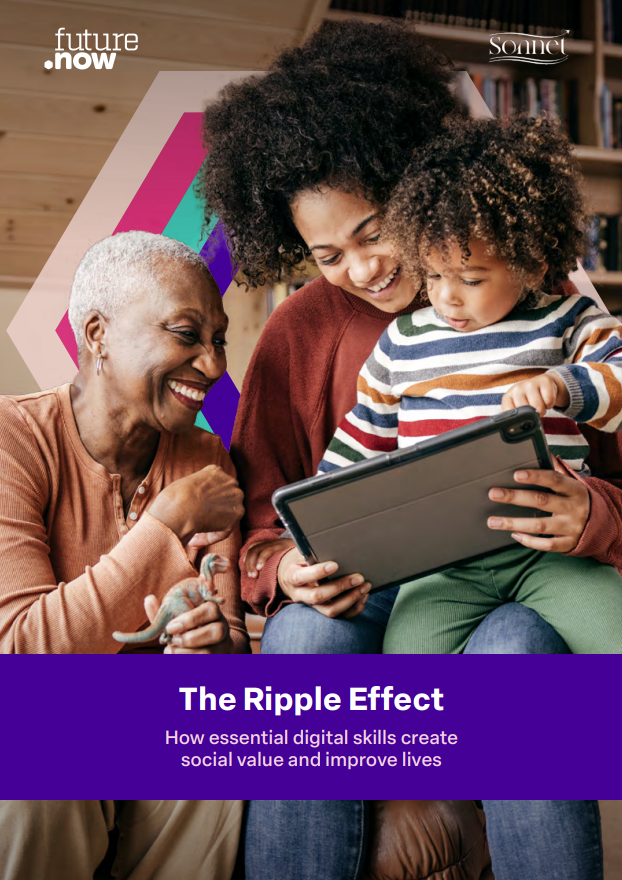
When working-age adults build essential digital skills, the benefits extend beyond the individual
In first of its kind research for FutureDotNow, Sonnet explores how essential digital skills create social value and improve lives. When we use digital safely it creates a ripple effect, improving our own outcomes, and those of our families and communities. We found that digital enables us to make better informed choices, and to communicate with and to make contributions to others.
Using digital devices safely and with confidence is vital to many people’s every day lives – at work and in their personal lives. While much is known about the effect of digital skills on productivity and earnings potential, comparatively less is known about the social value created when people of working age have essential digital skills.
Our research, taking a person-centred and story-based approach, explores how this ripple effect varies from person to person. For example, a young person who uses the internet to sell unwanted items, to shop online and to keep in touch with friends and might realise up to £12k per year in value. By contrast, a parent who uses digital to balance his work and home responsibilities can generate value of £3k per year.
There’s an opportunity to increase social value by improving essential digital skills in the working age population
Latest data show that 22.4 million people in the working age population are missing one or more of the essential digital skills. This means that there is a great amount of social value that is currently unrealised.
Even people who might, on the surface of it, appear to be digitally very competent are missing essential skills. This is compounded by the pace of change in technology and even ever-changing app settings. Some examples explored in our research are:
- Young people in the workplace who lack the confidence to ask for digital training, and may engage in risky activities online, like digital piracy
- For those in the last decade of employment, they are being left behind as technology changes and they do not have the ability to keep up
Our work shows that the returns on any investment in the digital skills of the workforce are likely to generate social returns (as well as financial returns), far in excess of the cost of the training provided.
You can read the full report here.
You can view the The Digital Skills Social Value Outcomes Framework here.